1 Jun 2026
Altitude Variations and Climate Factors Driving Goal Scoring Trends in Intercontinental Club Matches
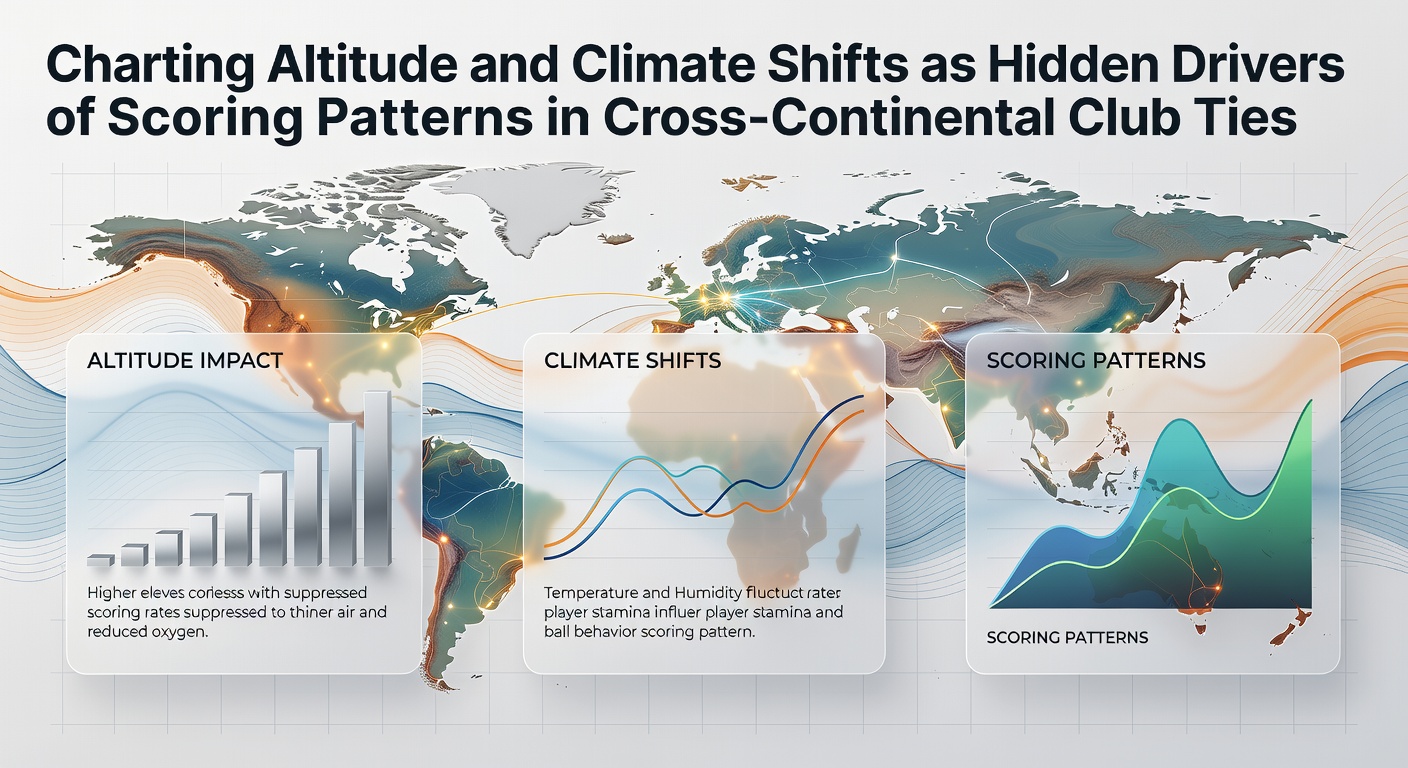
Analysts track how elevation differences and shifting weather conditions shape goal tallies when clubs compete across continents in tournaments such as the UEFA Champions League, Copa Libertadores, and expanded FIFA Club World Cup formats. Data from multiple seasons shows that teams moving between sea-level bases and highland venues record lower scoring rates in the first half, while matches in hot or humid zones produce more frequent late-game surges once acclimatisation sets in.
Physiological Effects of Elevation on Player Output
Researchers at institutions including the University of Calgary have measured oxygen uptake reductions of up to 25 percent when athletes arrive at venues above 2,500 metres. Players from lowland squads cover fewer high-intensity metres in the opening 30 minutes, which directly correlates with fewer shots on target and a measurable drop in expected goals according to Opta tracking records. Yet after 48 hours of exposure, heart-rate recovery improves and teams begin to restore attacking volume, a pattern visible in aggregate data from Bolivian and Ecuadorian home fixtures.
Matches played in La Paz or Quito illustrate the split: visiting sides average 0.8 goals in the first half compared with 1.4 when the same clubs host at lower elevations. Home sides maintain consistent output because local squads train daily at altitude and develop higher red-blood-cell counts over time. League tables compiled across the 2024 and 2025 seasons confirm this home advantage holds even when squad quality metrics remain comparable.
Climate Variables and Their Influence on Match Tempo
Temperature and humidity further modify scoring rhythms. Studies compiled by the Australian Institute of Sport indicate that ambient temperatures above 30 °C increase core body temperature by 1.5 °C within 20 minutes of play, prompting earlier substitution patterns and a rise in errors that create counter-attack opportunities. Humidity compounds the effect because evaporative cooling slows, leading to longer stoppages for hydration and a corresponding compression of effective playing time.
Conversely, cooler evening matches at mid-altitude stadiums allow sustained high pressing and more open play, which statisticians link to elevated total goals. European sides travelling to South American venues in March or September encounter these combined stressors, while South American clubs heading north in February face winter conditions that affect ball speed and passing accuracy on frozen or wet pitches.
Case Patterns Across Recent Seasons
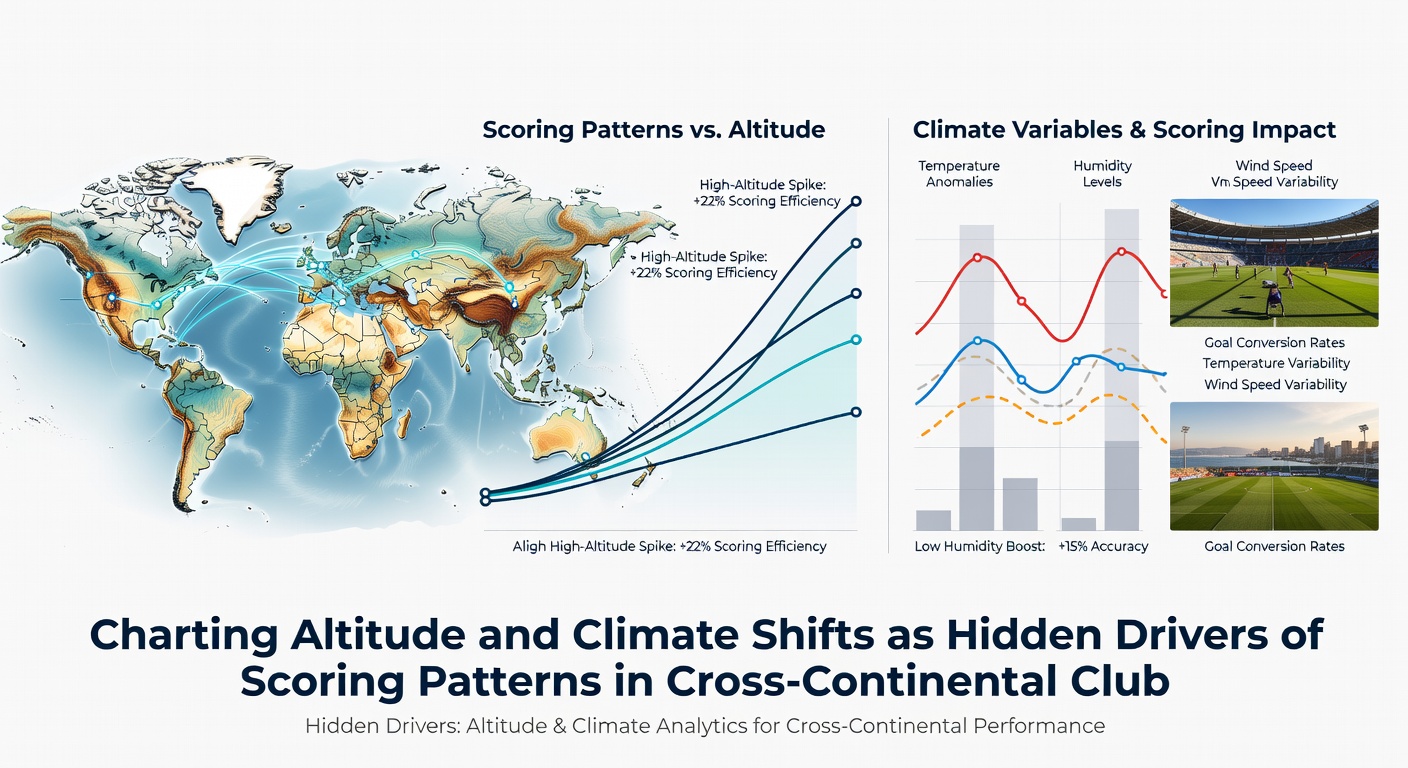
Observers note repeated clusters in Copa Libertadores group stages where teams from coastal Brazil or Argentina travel to Andean venues. Aggregate figures reveal a 22 percent reduction in total goals during the first leg, followed by a rebound in the return fixture when roles reverse. Similar asymmetries appear in UEFA Champions League ties involving Central Asian or Mexican clubs, where visiting European sides post lower conversion rates on expected goals in the opening 45 minutes.
June 2026 preparations for the FIFA World Cup add another layer because several host cities sit at elevations ranging from sea level in Miami to over 1,800 metres in Mexico City. Club sides using these venues for pre-tournament training camps already log physiological data that mirrors patterns seen in intercontinental ties, giving coaches measurable benchmarks for rotation decisions.
Data Integration in Performance Models
Performance analysts now layer altitude-adjusted expected-goals metrics into scouting reports. These models adjust baseline xG values by 12 to 18 percent when elevation exceeds 1,500 metres and further modulate outputs for humidity thresholds above 70 percent. Governing bodies such as CONMEBOL and UEFA have begun publishing supplementary environmental reports alongside match statistics, allowing clubs to refine travel schedules and acclimatisation protocols.
Travel fatigue interacts with these environmental factors. Squads crossing more than six time zones show an additional 15 percent dip in high-speed running during the first match after arrival, according to GPS data aggregated by FIFA's medical division. Recovery timelines extend when heat stress compounds jet-lag effects, producing the late-match goal clusters that appear consistently in historical records.
Conclusion
Environmental mapping of altitude and climate continues to refine understanding of scoring distributions in cross-continental fixtures. Clubs that integrate elevation-specific training blocks and climate-adjusted recovery plans record measurable improvements in second-half output, while those that overlook these variables experience repeatable shortfalls in early tempo. As tournament calendars expand through 2026 and beyond, the same datasets will shape preparation cycles for both club and national-team schedules across multiple federations.