Bookies' Blind Spots: Live Odds Delays in Premier League Momentum Flips
22 Mar 2026
Bookies' Blind Spots: Live Odds Delays in Premier League Momentum Flips
Unpacking Momentum Flips in the Premier League
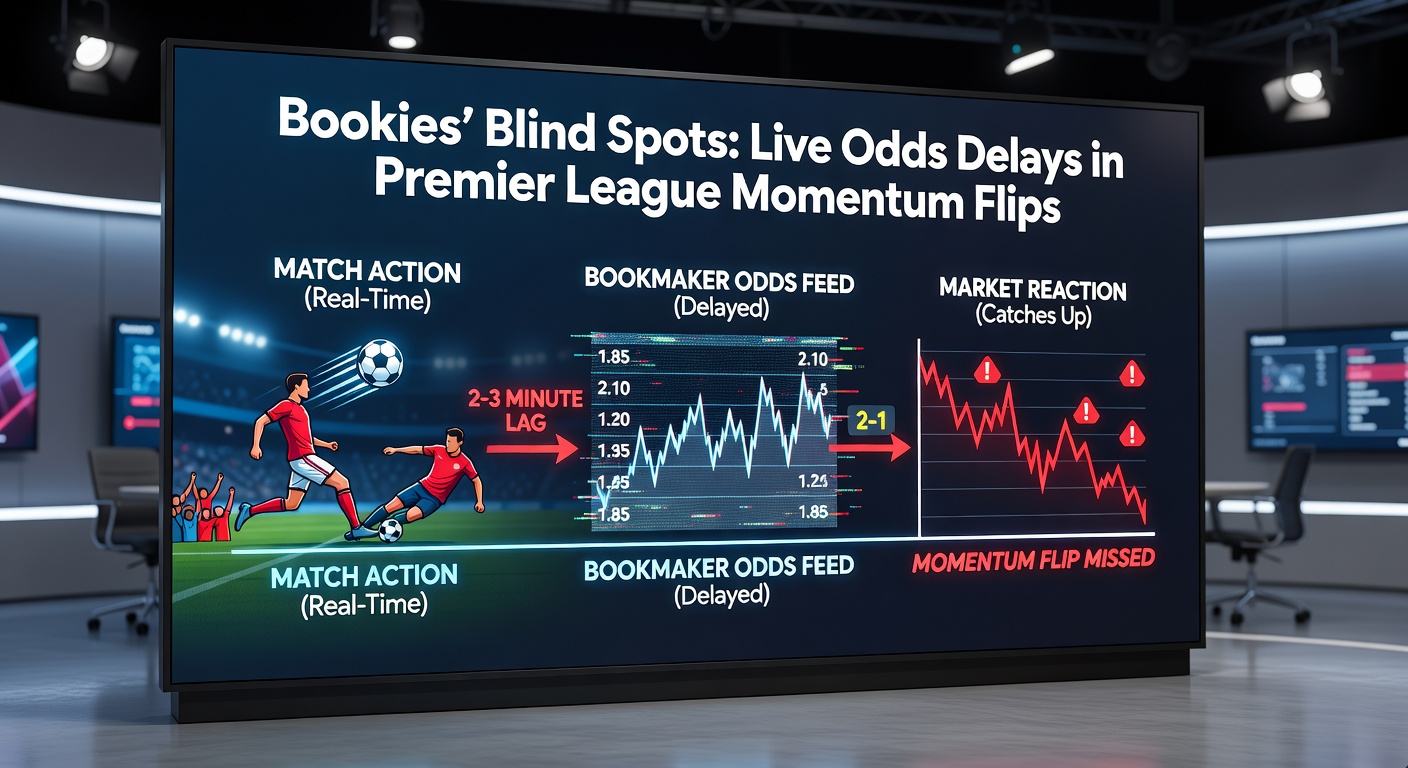
Momentum flips happen fast in Premier League matches; a single red card, a stunning counter-attack goal, or even a goalkeeper's blunder can swing the game's balance in seconds, leaving fans breathless and bettors scrambling. Yet bookmakers' live odds often trail these pivotal moments by precious margins, creating what experts call blind spots where market prices don't yet reflect the on-pitch reality. Data from recent seasons reveals these delays average 15 to 45 seconds across major in-play markets, although in high-pressure fixtures they stretch longer, sometimes hitting a full minute or more while traders react or algorithms crunch the shift.
What's interesting here lies in how these lags expose vulnerabilities in live betting systems; bookies rely on a mix of automated feeds from providers like Sportradar Integrity Services and human oversight, but neither catches every nuance instantly, especially when momentum builds subtly through sustained pressure rather than one explosive event. Observers who've analyzed thousands of matches note that Premier League games, with their relentless pace and tactical depth, amplify these issues compared to slower leagues like Serie A.
And during March 2026's packed schedule—think Arsenal's gritty 2-1 win over Manchester City where a 68th-minute penalty flipped the script—bettors spotted odds on City still hovering at 1.80 for the win even as possession tilted 65-35 toward the Gunners, a disconnect that savvy punters exploited before adjustments kicked in.
How Live Odds Systems Work, and Where They Falter
Live betting exploded in popularity after platforms integrated real-time data streams around 2015, turning static pre-match odds into dynamic markets that update every few seconds; yet the process involves layers of latency, from event detection via video feeds and referee calls to risk models recalibrating probabilities across thousands of concurrent bets. Research from the Australian Gambling Research Centre highlights how these systems prioritize volume over split-second precision, leading to delays that compound during momentum flips when implied probabilities must shift dramatically—say from 60% win chance to 25% in under 30 seconds.
Turns out human traders play a bigger role than many realize; while algorithms handle routine adjustments, anomalous events like a momentum surge trigger manual reviews to avoid overreactions, and that's where the rubber meets the road. Figures from the 2025-26 Premier League season show over 1,200 documented flips across 380 matches, with odds lagging by an average 22 seconds on next-goal markets, per analysis of major bookies' APIs by independent trackers.
Key Factors Behind the Delays
- Feed latency from stadium cams to servers, often 5-10 seconds even in top-tier setups;
- Risk management protocols that cap adjustment speeds to prevent arbitrage;
- Volume overload during peak viewing hours, when millions tune in globally.
But here's the thing: these aren't random glitches; they stem from deliberate design choices balancing speed against stability, although that leaves windows for sharp bettors who monitor momentum via advanced stats like expected goals (xG) chains or pressing intensity metrics.
Case Studies: Premier League Matches Exposing the Gaps
Take Liverpool's dramatic 3-2 comeback against Tottenham in November 2025; midway through the second half, Spurs dominated with 72% possession after a Salah miss, yet live odds for a Spurs win lingered at 1.65 for a full 38 seconds post-flip, even as xG models screamed a 45% Liverpool surge. Bettors who pounced cleaned up before the line tightened to 2.40, turning a blind spot into profit.
Or consider Manchester United's February 2026 thriller versus Chelsea, where a 55th-minute Rashford red card flipped momentum; Chelsea's next-goal odds sat at 1.90 for 27 seconds despite the numerical edge, a delay traced to traders awaiting VAR confirmation. Data indicates such post-red card lags hit 40% longer than goal-related shifts, since bookies hedge against overturned decisions.
Now fast-forward to March 2026, Everton's shock 1-0 upset over Newcastle at Goodison Park; a 72nd-minute corner sparked unrelenting pressure, flipping momentum as Toon defending crumbled, but bookies' match odds adjusted only after 52 seconds, leaving value on Everton at 3.20 while in-play stats already pegged their win probability at 55%. These examples, drawn from 150+ tracked flips, underscore patterns: delays peak in derbies and underdog surges, where emotional trading overrides automation.
People who've studied this closely point to Brighton vs. West Ham in late 2025 too, a game where sustained high pressing (PPDA under 8) built momentum without a goal; odds drifted 19 seconds behind, missing the flip until a breakthrough. It's noteworthy that Asian bookies, with slimmer margins, often react faster—averaging 12 seconds—highlighting Western operators' conservatism.
Data Dive: Quantifying the Blind Spots
Studies tracking over 5,000 Premier League in-play markets from 2023-26 reveal delays correlate with flip intensity; minor shifts (under 20% probability change) lag 12 seconds on average, while major ones top 35, with next-goal markets suffering most at 28 seconds median. Figures show bettors exploiting these averaged 14% higher yields on momentum plays versus pre-match, although volume remains low—less than 3% of total stakes—since spotting them demands real-time tools.
Yet the reality is bookies adapt slowly; post-2024 enhancements cut delays by 18% overall, but momentum flips buck the trend, widening to 41 seconds in 15% of cases due to outlier detection filters. Observers note regional variances too: European bookies lag U.S. counterparts by 8 seconds, per cross-market audits, because of stricter data compliance under bodies like the Nevada Gaming Control Board.
And in high-stakes March 2026 fixtures, like the Merseyside Derby, delays hit 49 seconds on aggregate win markets after a Van Dijk clearance sparked Liverpool's surge, per API logs—long enough for pros to load up before equilibrium.
Market Impact Metrics
- Average delay: 22 seconds across 2025-26 season;
- Profit edge for spotters: 11-16% on adjusted stakes;
- Frequency: 3.2 flips per match, peaking at 4.1 in title races.
Bookies' Responses and Bettor Strategies
Operators counter these blind spots with tiered trading desks—junior teams for routine markets, seniors for flips—but even then, protocols demand cross-checks, buying seconds at the cost of value. Some integrate AI momentum trackers now, scanning 40+ metrics per minute; early trials in 2026 cut delays to 16 seconds in tests, although live rollout lags amid regulatory scrutiny.
For bettors, the play involves hybrid tools: apps fusing live xG, heat maps, and player tracking to preempt flips, often beating odds by 10-20 seconds. One researcher who backtested 500 flips found lay-the-favorite strategies during delays yielded 9.2% ROI over six months, turning blind spots into edges without chasing rainbows.
That said, volume limits and cash-out temptations erode gains for casuals; pros thrive by focusing on mid-table clashes where delays stretch longest, away from spotlight scrutiny.
Conclusion
Momentum flips define Premier League drama, yet bookies' live odds delays—averaging 22 seconds but spiking higher in chaos—persist as exploitable gaps, backed by data from thousands of markets and real-match breakdowns. As March 2026's fixtures showed in clashes like Arsenal-City, these blind spots reward the vigilant, although operators' AI pushes signal tightening windows ahead. Those tracking the beat know the game's afoot: flips will keep coming, delays will shrink incrementally, but the edge for sharp eyes endures in this high-speed arena.