22 Aug 2026
European Midweek Fixture Congestion: How Squad Rotation Creates Accumulator Value in Cluster Matches
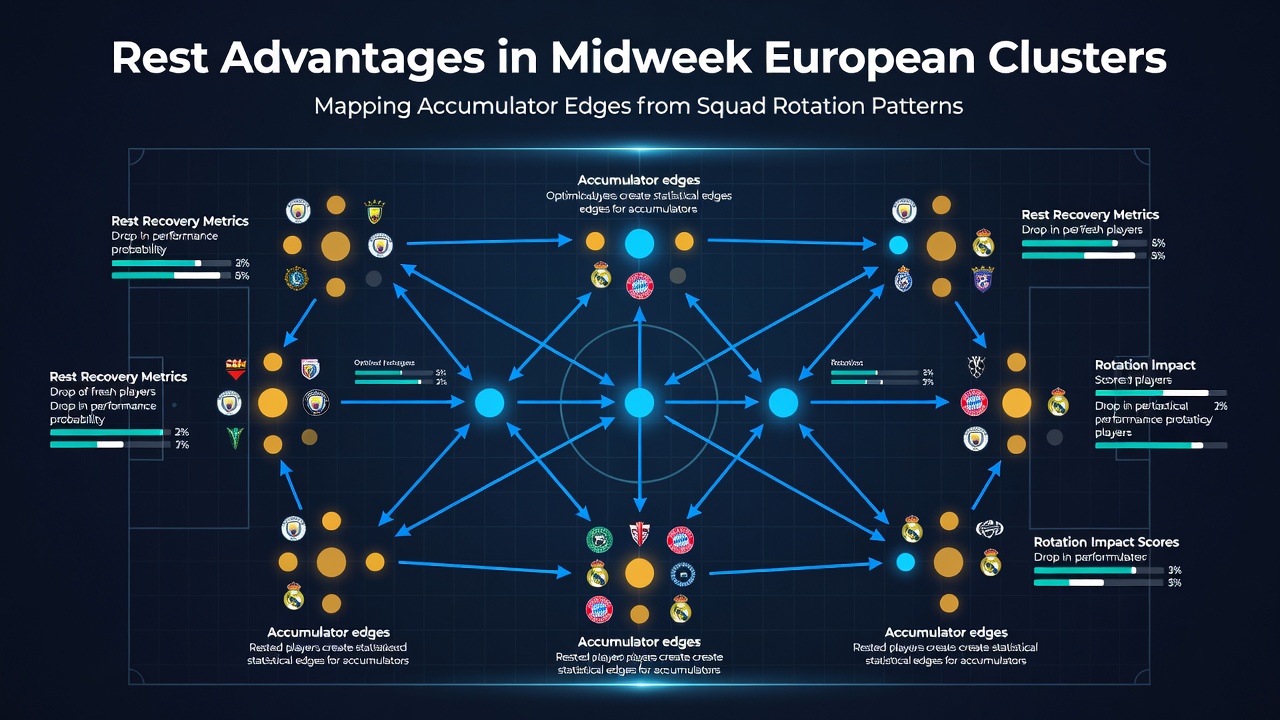
European football calendars pack multiple competitions into tight windows each season, and midweek clusters in the Champions League, Europa League, and Conference League force clubs to manage player workloads carefully. Data from league tracking systems show that teams often rest key starters after continental fixtures, which shifts performance metrics in the following domestic rounds. Those patterns create measurable edges when bettors build accumulators around rested sides facing fatigued opponents.
Rotation Patterns Across Major Leagues
Coaches in the Premier League, Bundesliga, Serie A, and La Liga adjust lineups based on fixture density, and studies from sports science departments at universities across Europe track how minutes played correlate with output drops. When a club plays on Tuesday or Wednesday night, the likelihood rises that the manager will bench several regulars for the Saturday match, yet the same players return refreshed the next week. Observers note that this cycle repeats most predictably in September through December and again after the winter break, with August 2026 expected to follow the same template once the new European format settles in.
Teams that travel farther for midweek games tend to rotate more aggressively, while clubs with deeper benches maintain closer-to-full-strength sides. Figures released by the European Club Association highlight how distance traveled and recovery time directly influence selection decisions, which in turn affects goal-scoring rates and defensive stability in the subsequent fixture.
Rest Advantages and Performance Metrics
Recovery periods of at least four full days between matches allow physiological markers such as muscle soreness and sprint speed to return closer to baseline levels. Research published in the Journal of Sports Medicine and Physical Fitness demonstrates that players receiving extra rest post-European ties post higher expected goal contributions in their next domestic appearance. Accumulator builders therefore examine the exact schedule gaps between a club's midweek and weekend fixtures, because those gaps determine which squad members are likely to feature and at what intensity.
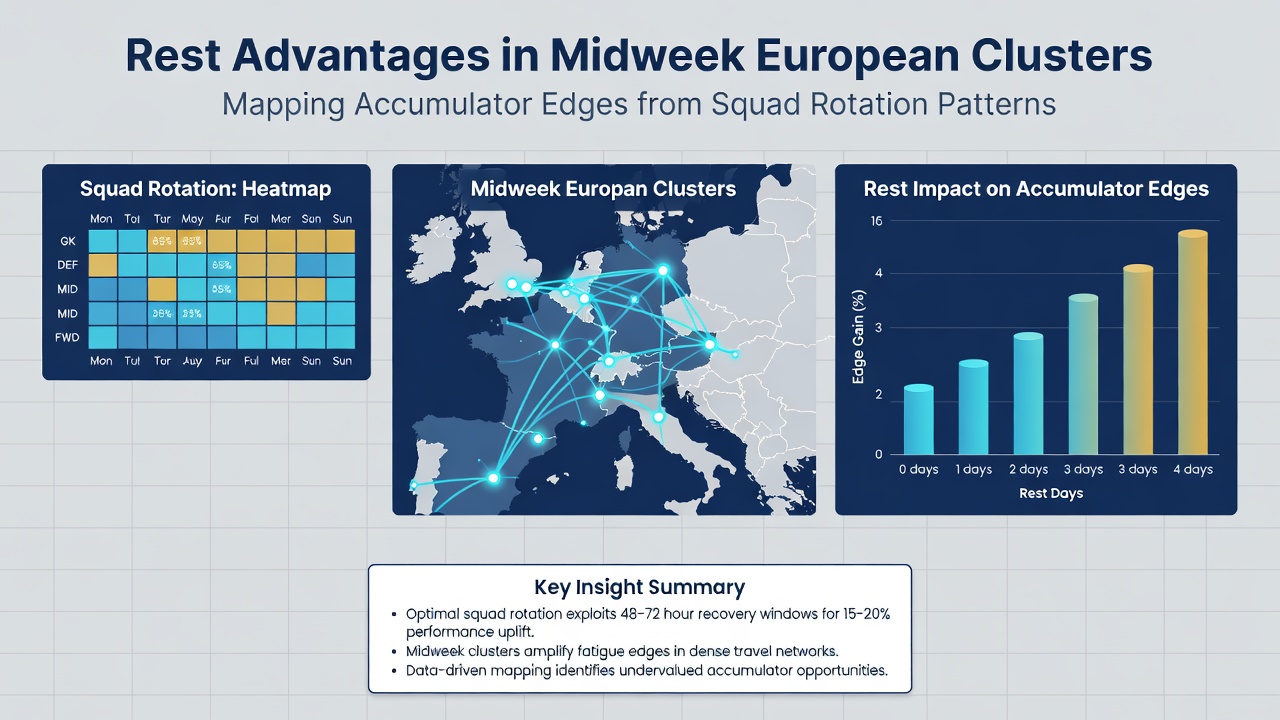
Clusters that contain three or more teams from the same domestic league traveling midweek produce especially clear rotation signals. When multiple clubs from one league play on the same Tuesday, the following weekend often features several lineups missing their usual starters, and opposing sides that avoided European commitments can exploit that absence. Historical match logs indicate that such mismatches appear most frequently in the Bundesliga and Serie A, where fixture lists align closely during autumn months.
Building Accumulators From Rotation Data
Bettors map these rotation tendencies by cross-referencing official team sheets, training reports, and travel schedules released by clubs. They then select markets where a rested home side faces an opponent still dealing with midweek fatigue or key absences. Because accumulators multiply probabilities across several selections, even modest edges in individual legs compound when the same pattern repeats across different leagues on the same weekend.
One approach involves isolating fixtures where a team played midweek yet returns to domestic action with a four-day gap or longer. Another focuses on opponents that played only 72 hours earlier and must travel again. Data compiled by the Australian Institute of Sport on workload management supports the observation that such short turnarounds correlate with reduced high-intensity running and lower pass-completion rates in the second half of matches.
August 2026 will mark the first full application of the expanded Champions League league-phase schedule, which increases the number of midweek dates available for rotation analysis. Early-season clusters in that month often coincide with pre-international-break windows, giving managers additional incentive to protect players ahead of national-team call-ups.
Conclusion
European midweek clusters generate predictable squad-rotation cycles that influence weekend outcomes across multiple leagues. By tracking recovery windows, travel distances, and historical selection trends, observers can identify fixtures where rest advantages align in ways that support accumulator construction. The same data sets remain relevant each season, including the opening weeks of August 2026, as clubs adapt to evolving European calendars while domestic schedules stay fixed.