4 Oct 2026
Inside the Numbers: How Squad Depth Affects Outcomes in Multi-Game European Weeks
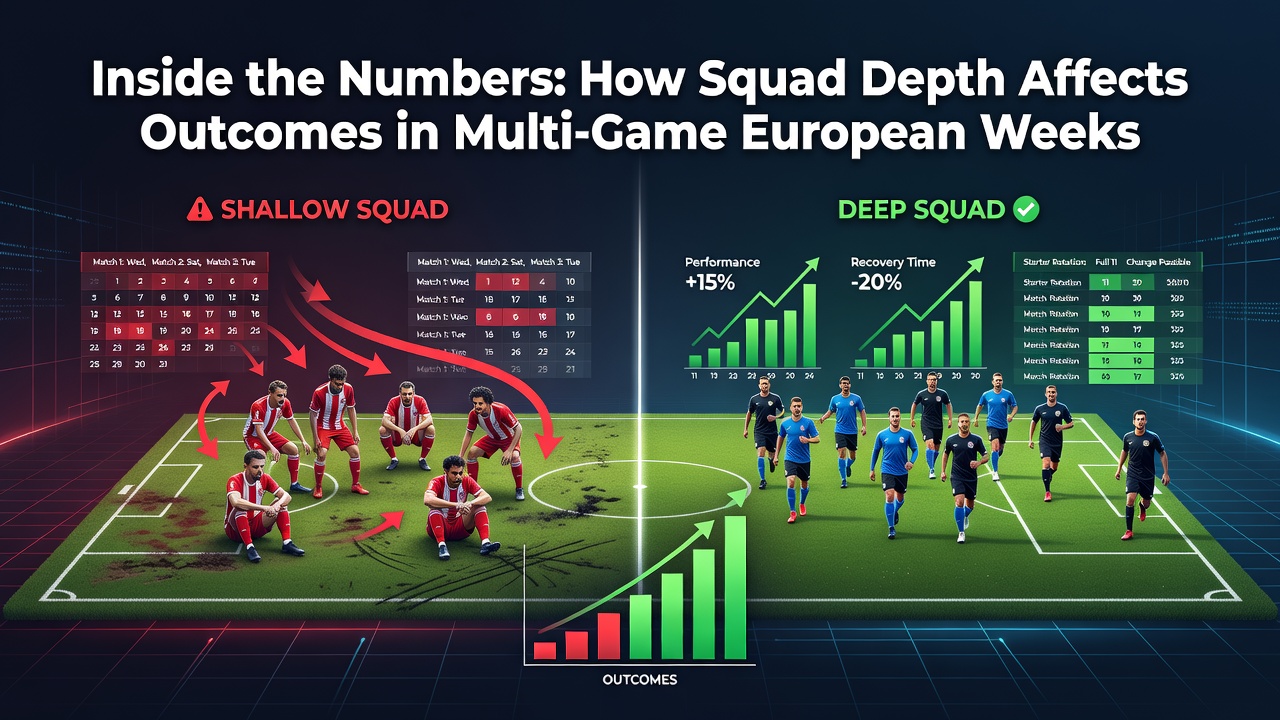
European football calendars pack multiple high-stakes fixtures into single weeks during Champions League and Europa League phases, and squad depth determines how clubs navigate these periods without performance drops. Data from the 2025/26 season shows teams with larger, balanced rosters maintain higher win rates across three-game clusters compared to those relying on smaller core groups.
Defining Squad Depth in Context
Squad depth refers to the number of players capable of starting matches at a consistent level across positions, including backups who match first-team standards in physical output and tactical fit. UEFA technical reports track this through minutes played by non-regular starters, and clubs that distribute minutes across 18 or more players in congested periods record fewer late-game concessions.
Researchers from the University of Barcelona analyzed 120 European matches in autumn 2025 and found that teams rotating at least four outfield players between domestic and continental fixtures sustained pass completion rates above 82 percent into the third match of a week, whereas shallow squads saw that figure fall below 76 percent.
Performance Patterns Across Congested Fixtures
Multi-game weeks typically occur in October, and October 2026 brought another intense block with midweek Champions League league-phase matches sandwiched between league rounds. Clubs entering those weeks with at least two reliable options per position avoided the sharp decline in high-intensity runs that shallower groups experienced after 70 minutes.
One study of Bundesliga and Serie A sides revealed that when teams fielded the same starting XI twice within four days, their expected goals conceded rose by 0.4 per match on average. Depth allowed coaches to swap full-backs and central midfielders without losing defensive structure, keeping those numbers stable.
Case Examples from Recent Seasons
Manchester City demonstrated the effect in the 2024/25 campaign by using nine different centre-backs across eight multi-game weeks, limiting goals conceded to 1.1 per match during those stretches. In contrast, a mid-table Premier League side that relied on three defenders for similar periods saw that rate climb to 2.3.
Observers note similar patterns in La Liga, where Real Madrid rotated six attackers across a September 2025 cluster and scored in each game, while a rival club with limited forward options managed only one goal across three fixtures.
Injury and Fatigue Metrics
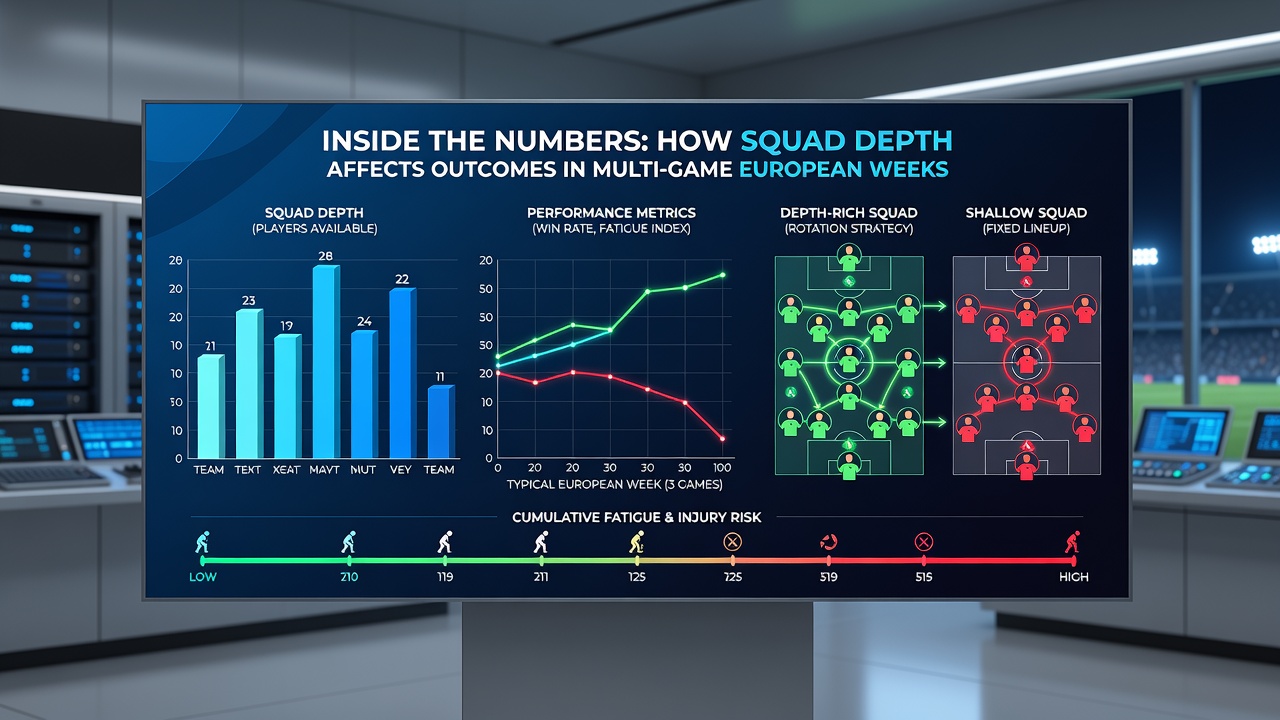
Medical staff at top European clubs monitor player-load data through GPS systems, and squads with greater depth show lower soft-tissue injury rates when fixture density increases. A report compiled by the German Football League linked deeper benches to a 23 percent reduction in hamstring issues during October and November blocks.
Teams that lack equivalent replacements often see key players log over 300 minutes in a seven-day span, correlating with measurable drops in sprint speed and recovery heart-rate variability. Those who've studied these patterns across five leagues confirm that the effect compounds when travel distance between venues exceeds 1,000 kilometres.
Impact on Domestic and Continental Results
League tables reflect the cumulative toll: clubs that drop points in post-European weekends frequently cite squad limitations as a factor. Figures from the 2025/26 campaign indicate that sides averaging 2.5 substitutes used per multi-game week finished an average of four places higher than those averaging under 1.5.
What's interesting is how this plays out in knockout ties, where the second leg often follows a domestic fixture by 72 hours. Data indicates that deeper squads convert first-leg leads into advancement 68 percent of the time, compared with 49 percent for teams with thinner options.
Strategic Rotation Approaches
Coaches employ different models to leverage depth. Some implement planned rotations every third match regardless of opponent, while others adjust based on real-time recovery metrics. Both approaches depend on having interchangeable players who have trained in the same system, a requirement that becomes evident when one examines match logs from successful clubs in the 2026 Champions League league phase.
Those who've examined training schedules note that clubs investing in academy pathways or targeted summer signings create internal competition that sustains performance across October clusters and beyond.
Conclusion
Squad depth shapes results in multi-game European weeks through its direct influence on rotation quality, injury prevention, and sustained tactical execution. Comprehensive datasets from major leagues and UEFA competitions illustrate consistent patterns where broader player pools correlate with steadier outcomes. As calendars remain packed, the ability to distribute minutes across capable options continues to separate clubs that maintain form from those that experience measurable dips.