17 Aug 2026
Recovery Timelines After International Breaks and Their Effects on Early Domestic Fixtures
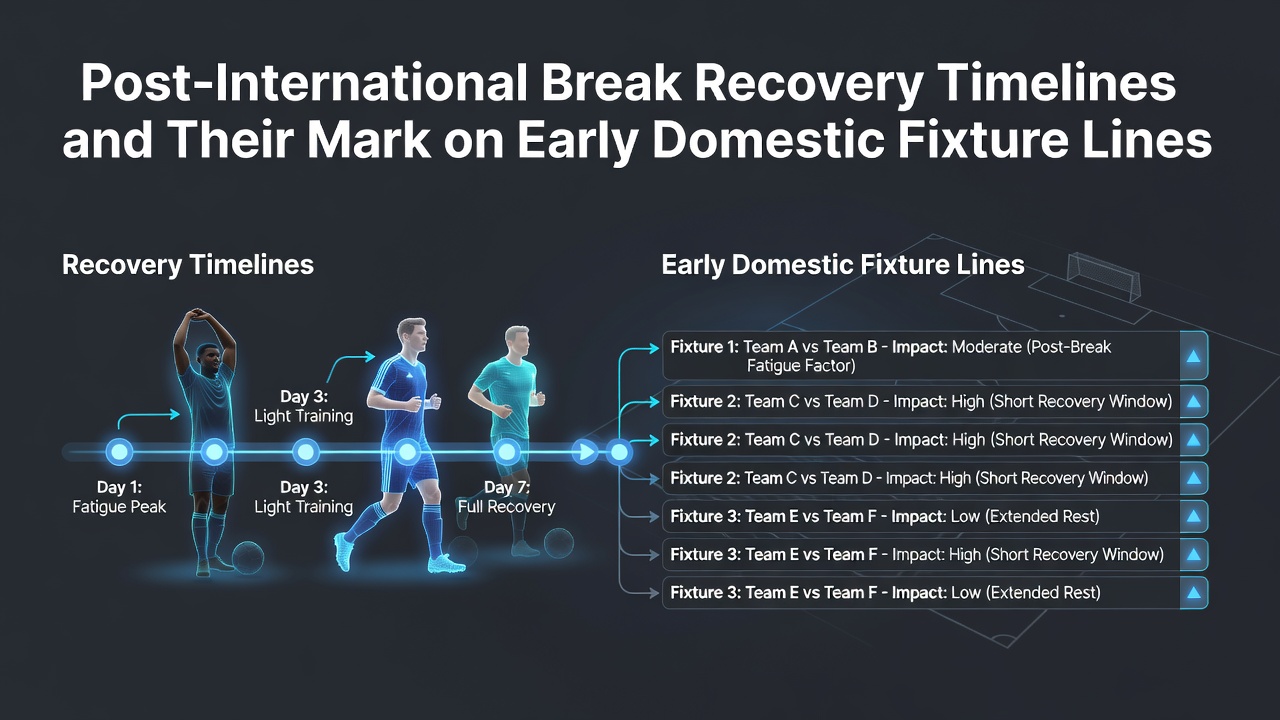
International breaks disrupt club schedules in structured ways, and recovery timelines play a measurable role in how teams approach the opening weeks of domestic campaigns. Data from multiple leagues shows that players returning from national team duty often require between five and ten days to regain full match readiness, depending on travel distance, match intensity, and individual conditioning factors. Those timelines intersect directly with fixture lists that cluster early in the season, creating observable patterns in performance metrics across Europe's top divisions and beyond.
Understanding the Structure of International Windows
International windows typically span ten to fourteen days and pull players from club environments into national team commitments that involve travel across continents. Observers note that teams with higher numbers of internationally capped players experience greater disruption during these periods, while squads relying on domestic talent maintain more consistent training rhythms. Studies conducted by sports science groups indicate that long-haul flights contribute to measurable increases in muscle soreness and reduced sleep quality, factors that extend recovery needs beyond the immediate post-match period.
August fixtures sit particularly close to summer international activity, and this proximity becomes relevant again in 2026 when the FIFA World Cup concludes in July. Domestic leagues resume shortly afterward, forcing clubs to integrate returning players into high-stakes matches with limited preparation time. Researchers have tracked heart rate variability and GPS workload data during these transitions, revealing that full physiological restoration often lags behind the calendar demands of the fixture list.
Physiological Demands and Documented Recovery Periods
Recovery encompasses multiple systems including neuromuscular function, metabolic replenishment, and psychological reset. Evidence from elite performance programs demonstrates that players who accumulate over 300 minutes of international match time in a single window show slower return-to-baseline readings in countermovement jump tests compared with those who see limited minutes. These differences persist for up to nine days in some cohorts, according to longitudinal monitoring conducted across several European clubs.
Coaches adjust training loads accordingly, yet early domestic fixtures leave little margin for gradual reintegration. One study tracking Bundesliga squads found that teams averaged 1.2 fewer high-intensity runs per player in the first match after an international break when the squad contained four or more long-haul travelers. Similar patterns appear in Serie A and La Liga datasets, where fixture congestion in late August amplifies the effect.
Fixture Congestion Patterns in August and September
Domestic calendars place multiple matches within short succession following the first international window of the season. Analysts reviewing 2024 through 2025 schedules observed that clubs with European commitments face an especially compressed timeline, often playing within seventy-two hours of player returns. This compression reduces opportunities for individualized recovery protocols and increases reliance on squad rotation decisions made with incomplete data.
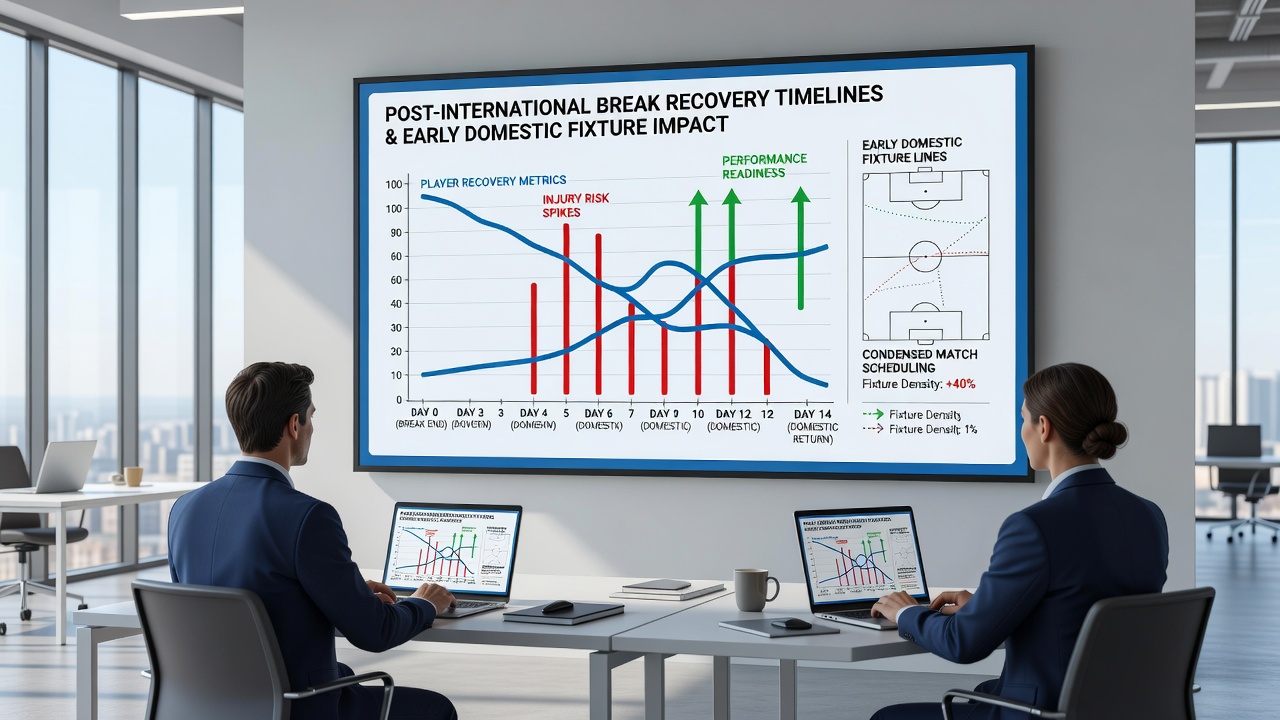
League-wide statistics compiled by performance analysis firms reveal modest but consistent dips in expected goals and pass completion rates during these early rounds. The effect appears more pronounced among defenders and midfielders who log high distances in national team matches, while forwards sometimes maintain output levels if their international minutes remain moderate. Such variations influence tactical setups that managers select for the opening domestic fixtures.
Regional Variations in Player Management Approaches
Clubs operating in different confederations adopt distinct strategies for managing post-break returns. South American teams, for instance, contend with longer travel distances for Copa América qualifiers, prompting some federations to coordinate with domestic leagues on adjusted kickoff times. Data shared through the Australian Institute of Sport highlights comparable challenges for A-League sides integrating players from Asian Cup cycles, where time zone shifts exceed eight hours.
North American leagues face parallel issues during CONCACAF windows. Research coordinated by the United States Soccer Federation medical staff shows that players returning from Central American venues exhibit elevated markers of inflammation for six to eight days, informing how MLS teams structure their early-season training blocks. These regional differences underscore that recovery timelines are not uniform and depend heavily on geography and competition density.
Monitoring Tools and Data Integration
Modern performance departments employ wearable technology and wellness questionnaires to quantify readiness upon player return. Thresholds for training intensity are adjusted when readings fall outside established norms, yet the pressure of early domestic results limits how far clubs can delay full integration. Teams that maintain detailed longitudinal databases appear better positioned to anticipate which players will require extended recovery, allowing for more precise rotation planning in August and September matches.
Observers have noted that academies and loan pathways sometimes accelerate the process when senior squad members remain unavailable, although this introduces its own set of variables regarding experience levels in high-pressure fixtures. The interaction between recovery science and fixture scheduling continues to evolve as leagues expand calendars and national team demands increase.
Conclusion
Recovery timelines after international breaks intersect with early domestic fixture lines in measurable ways that clubs track through performance data and physiological monitoring. Patterns identified across multiple leagues indicate that travel distance, match minutes, and fixture density each contribute to the duration required for players to regain baseline readiness. As the 2026 calendar places domestic resumption immediately after the World Cup, these dynamics will receive renewed attention from performance staff seeking to optimize squad management during congested opening periods.