25 Jun 2026
Referee Decision Patterns Driving Penalty Market Dynamics in Europe's Elite Football Leagues
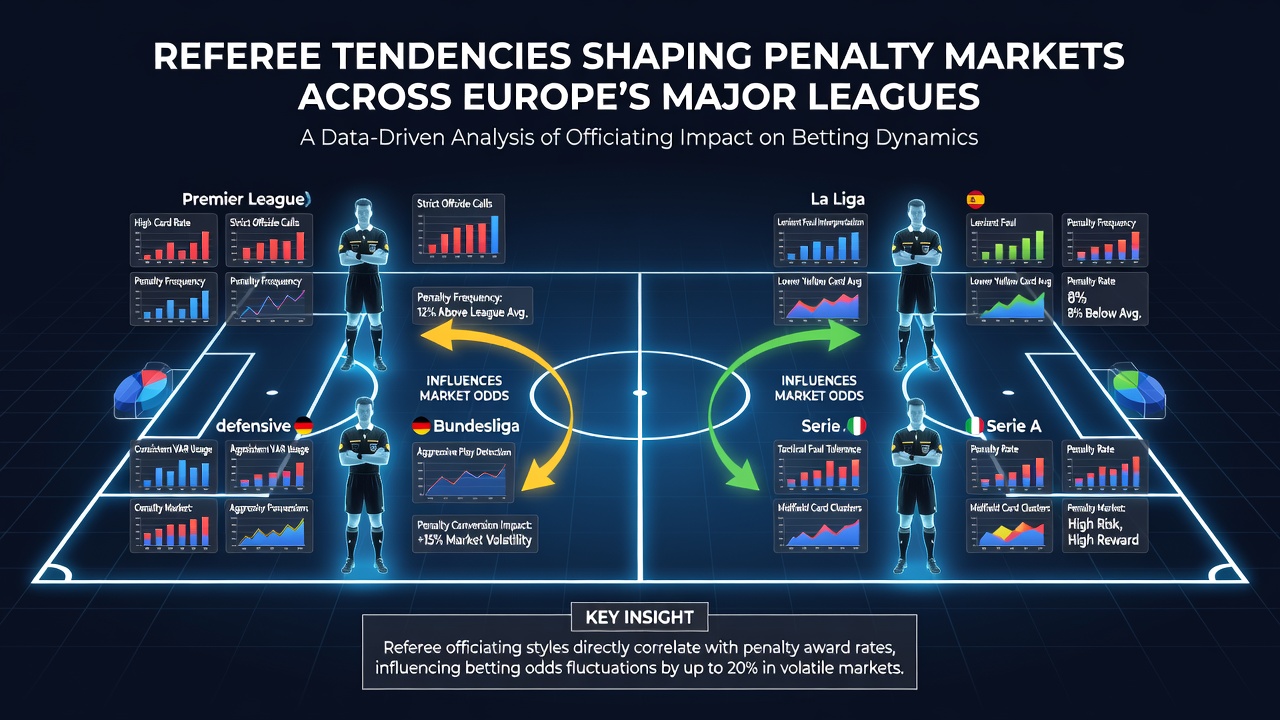
Referee tendencies have become a measurable factor in how penalty markets respond across the Premier League, La Liga, Serie A, Bundesliga and Ligue 1. Data compiled over multiple seasons shows consistent variations in the frequency and timing of spot-kick awards that bookmakers incorporate into their pricing models. Observers note that these patterns emerge from individual referee styles, video assistant review protocols, and league-specific directives on physical contact.
League-by-League Variations in Award Rates
Premier League records indicate an average of 4.8 penalties awarded per team across the 2025-26 campaign through late May, with certain officials consistently exceeding that benchmark by 15 to 20 percent. Bundesliga figures, drawn from official match reports, reveal a slightly lower rate of 4.2 per team yet a higher proportion of awards occurring in the final 20 minutes of matches. Serie A data released by the Italian football federation highlights a preference for stricter enforcement inside the box during high-stakes fixtures, resulting in elevated numbers during April and May rounds.
La Liga statistics, tracked through the 2025-26 season, demonstrate that referees assigned to matches involving mid-table sides issue penalties at a rate 12 percent below the league average. Ligue 1 reports show the opposite trend in fixtures between top-six clubs, where video reviews have produced an uptick in decisions favoring attacking teams. These documented differences feed directly into pre-match odds adjustments made by operators across the continent.
Impact on In-Play and Pre-Match Pricing
Market makers monitor referee assignments released 48 hours before kickoff and recalibrate lines accordingly. When an official with a documented high penalty rate is confirmed for a fixture, prices on both teams to concede a spot kick shift within minutes. Live betting platforms extend this process by tracking real-time foul counts and adjusting micro-markets after each decision. Historical datasets reveal that matches officiated by certain Serie A referees have produced penalty markets that move an average of 0.35 goals in expected value terms once the game begins.
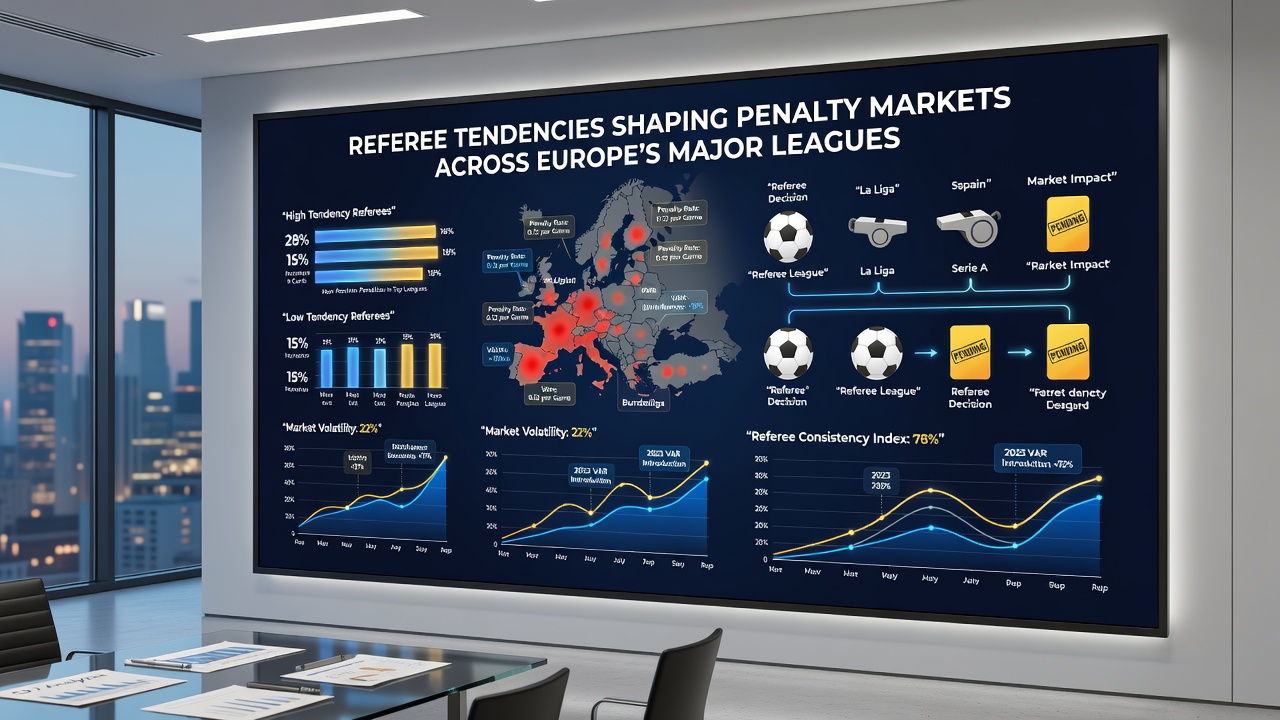
European betting exchanges publish aggregated order-flow data that further illustrates how sharp accounts target specific referee profiles. During June 2026, as the 2025-26 domestic campaigns concluded, several exchanges recorded elevated volumes on penalty-related propositions involving officials returning from international duty. The adjustments reflect accumulated evidence rather than speculation, because multiple seasons of Opta-tracked events now underpin the models.
Video Review Protocols and Their Influence
Introduction of refined VAR guidelines in 2024 produced measurable shifts in several competitions. Bundesliga matches processed through the updated review system saw a 9 percent rise in penalties converted from initial on-field decisions. Premier League protocols, which emphasize clear and obvious errors, have maintained steadier award rates but increased the proportion of penalties given after lengthy stoppages. La Liga's federation published a technical summary in May 2026 confirming that delayed reviews correlate with higher conversion rates for attacking sides in the final quarter of matches.
Those who've studied the datasets note that referees who previously worked in lower divisions before promotion often carry forward tendencies that persist for two to three seasons. Serie A and Ligue 1 records both contain examples of officials whose early-career penalty frequencies remained elevated after their move to the top flight. Market analysts incorporate these career trajectories when constructing season-long models.
Geographic and Cultural Factors in Enforcement
Cross-border comparisons compiled by academic researchers at institutions including the University of Groningen demonstrate that cultural interpretations of contact continue to influence outcomes even under harmonized UEFA directives. Northern European leagues record fewer penalties per 90 minutes than southern counterparts, a pattern that has held across five completed seasons. These regional differences create arbitrage opportunities when teams from contrasting leagues meet in continental competition.
Industry reports from the European Betting and Gaming Association, alongside data from the German Football Association's analytics unit, confirm that penalty markets now account for a growing share of in-play turnover. Operators adjust limits and margins based on referee history rather than team form alone, producing more granular pricing than existed five years earlier.
Conclusion
Referee tendencies have evolved into a quantifiable input for penalty market construction across Europe's major leagues. League records, video review statistics and assignment histories supply the raw material that shapes both pre-match and live odds. As the 2025-26 season closed in June 2026, the integration of these datasets into pricing engines continued without interruption, reflecting established patterns rather than temporary fluctuations.