21 May 2026
Tracing Ripple Effects of International Breaks on Domestic League Form Guides
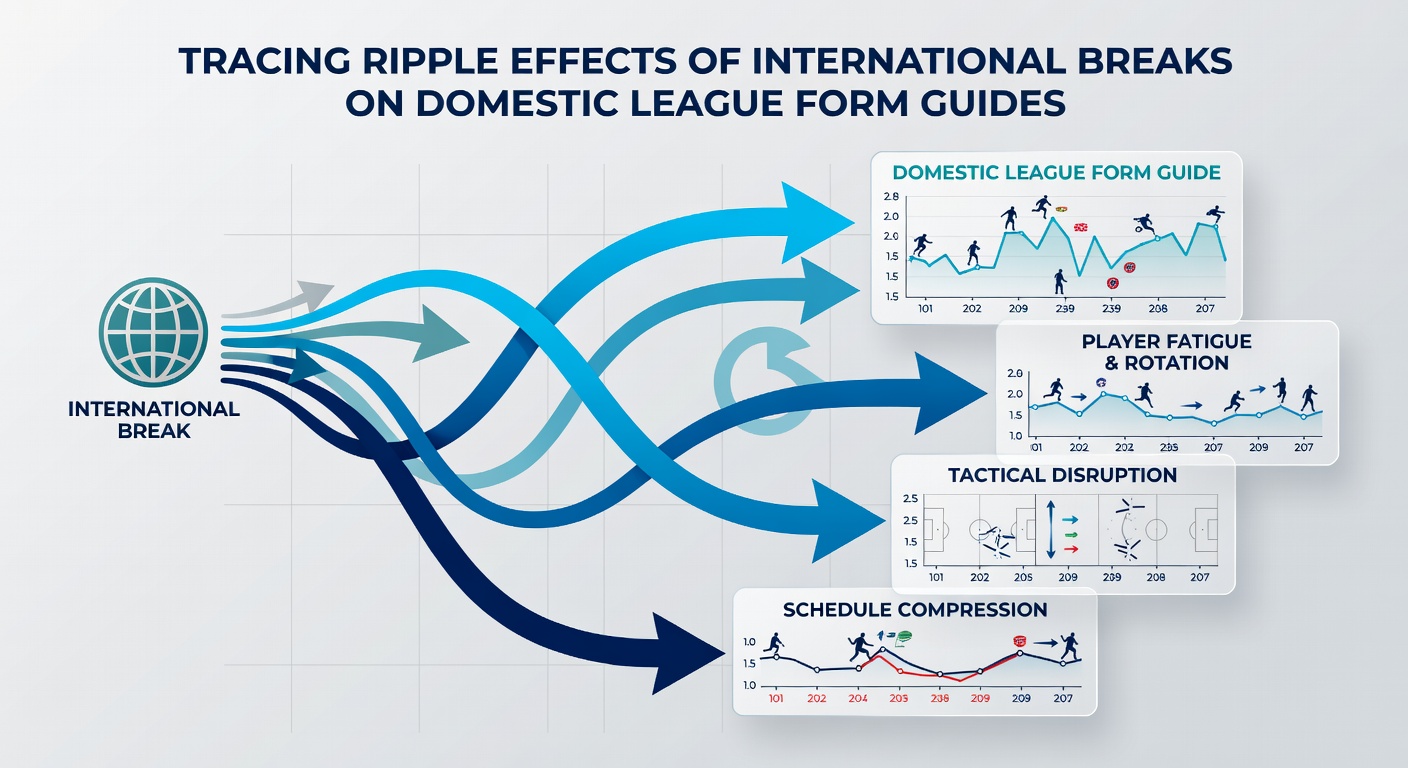
International breaks interrupt domestic league schedules at regular intervals throughout the season, and researchers have tracked how these pauses reshape team performances in competitions across Europe and beyond. Data from multiple leagues shows patterns of altered win rates, goal tallies, and defensive records once clubs resume their campaigns, while observers note that player availability shifts play a central role in these changes. Teams often face sudden roster adjustments because national team call-ups pull key personnel away for matches in various confederations, and this creates ripple effects that extend well beyond the break itself.
Player Availability and Recovery Cycles
Clubs must navigate the return of players who have competed in international fixtures, and studies indicate that recovery timelines vary based on travel distances and match intensities. Those who participate in qualifiers or friendlies across continents frequently experience delayed reintegration into club routines, whereas domestic-based players maintain continuity in training. Figures from league analyses reveal that squads with high numbers of international representatives tend to post lower points per game in the first two fixtures after a break, although some sides demonstrate rapid adaptation through squad rotation strategies.
Tactical and Cohesion Adjustments
Coaches adjust formations and set-piece routines during the absence of star players, yet reintegration often requires several training sessions to restore fluid combinations. Evidence suggests that midfield partnerships suffer most when key distributors return fatigued, while defensive units sometimes tighten due to the extra rest afforded to non-international squad members. In one notable case from the 2024-25 season, a mid-table Premier League side recorded three consecutive clean sheets immediately after an international window because their backline had remained largely intact while opponents dealt with scattered absences.
League tables reflect these disruptions through fluctuating goal differences and points sequences, and analysts compile form guides that segment performances before and after each break. Metrics compiled by research groups show that home teams gain a slight edge in the immediate post-break round because visiting sides struggle with jet lag and disrupted preparation schedules. But here's the thing: away form can improve later in the cycle once players regain match sharpness through club minutes.
League-Specific Patterns Emerging in 2025-26
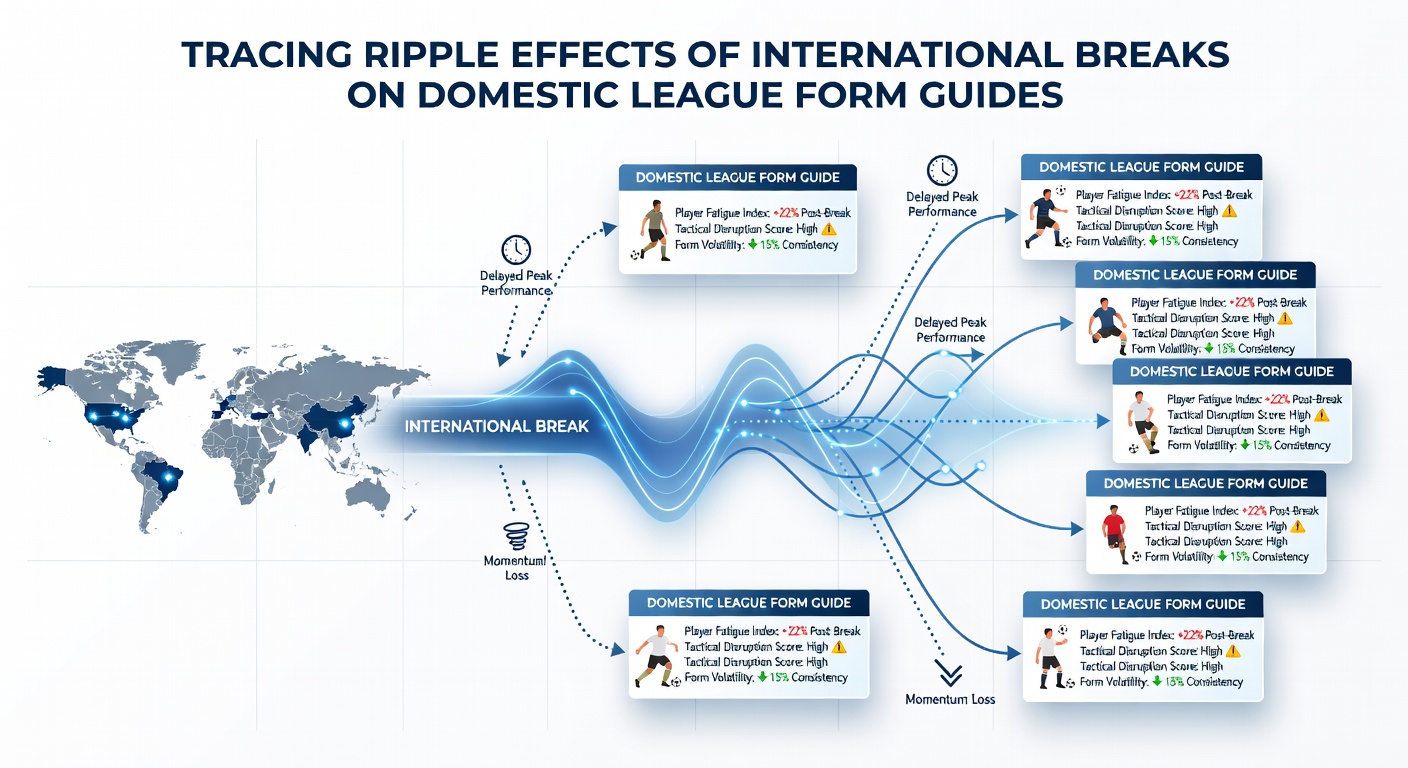
Across the Premier League and Bundesliga, data indicates modest dips in scoring averages during the first weekend after breaks, while La Liga and Serie A sometimes record upticks in draws. Observers attribute these variations to differing fixture densities and squad depths, and teams with larger benches absorb the interruptions more effectively. As May 2026 approaches, several leagues will face compressed schedules that include another international window, prompting clubs to plan rotation policies well in advance to safeguard key performers ahead of title deciders and relegation battles.
Performance tracking platforms aggregate these trends into updated form guides that bettors and analysts consult when assessing upcoming fixtures. Researchers from sports science institutions have documented how psychological factors also contribute, noting that some players return with heightened confidence after successful national team campaigns while others show signs of mental fatigue. These elements combine to produce unpredictable early results that gradually stabilize as the domestic rhythm resumes.
Data Insights from Broader Competitions
According to reports issued by UEFA technical studies, European clubs collectively lose an average of 1.2 points per game in the round immediately following major international dates. Similar patterns appear in South American leagues monitored by CONMEBOL-affiliated analysts, although the magnitude differs due to longer travel requirements for players representing nations such as Brazil and Argentina. These statistics help form a clearer picture of how breaks propagate through domestic campaigns, and they inform preparation protocols adopted by coaching staffs worldwide.
Longer-Term Effects on Season Trajectories
Over an entire campaign the cumulative impact of multiple breaks becomes visible in final standings, where teams with balanced international representation often maintain steadier form curves. Data shows that clubs heavily reliant on one or two star players experience sharper swings, and this leads to revised expectations in mid-season assessments. Those who have studied these cycles note that fixture congestion following breaks can either accelerate or hinder momentum depending on the quality of squad depth available to each manager.
Conclusion
International breaks continue to shape domestic league outcomes through interconnected effects on player fitness, tactical cohesion, and squad rotation. Form guides compiled after each window provide valuable snapshots that highlight emerging patterns across competitions, and ongoing research refines understanding of these dynamics as schedules evolve toward 2026. Observers expect clubs to place greater emphasis on recovery science and data-driven planning to mitigate disruptions while capitalizing on any advantages that arise from altered team rhythms.