2 Jul 2026
Weather Dynamics Influencing Goal Totals in Europe's Lower Division Football Matches
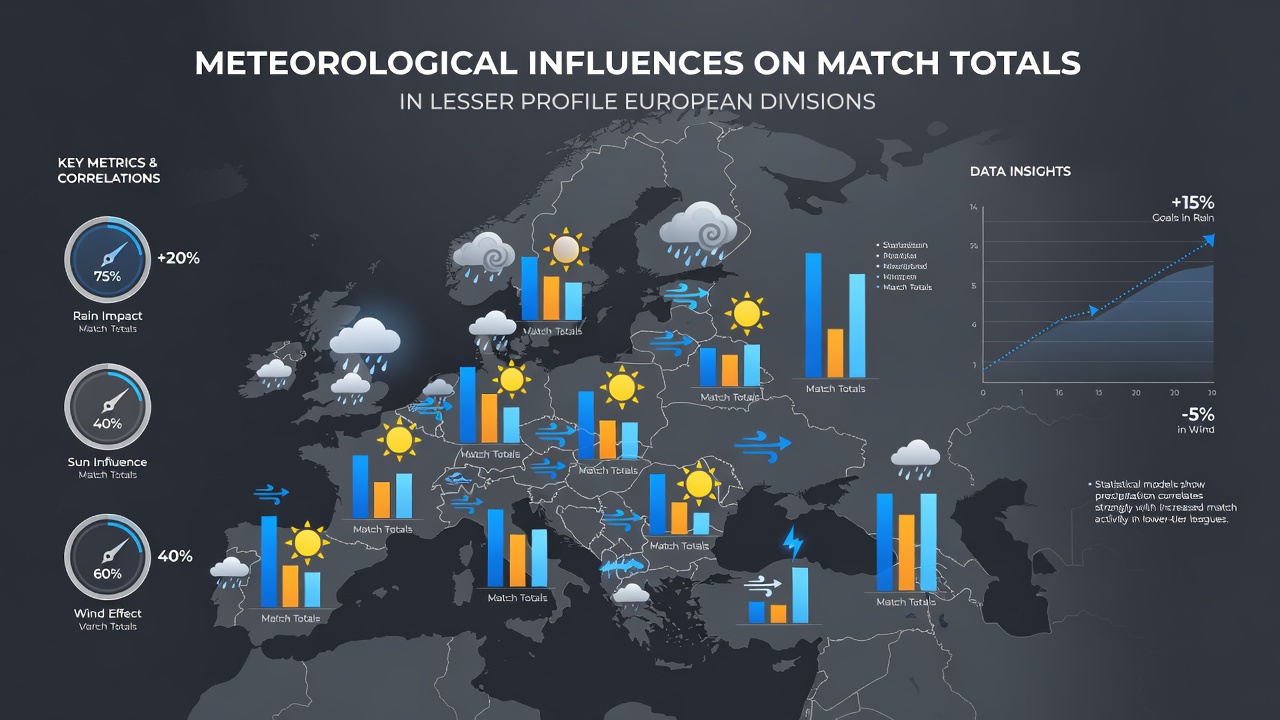
Lower-profile European divisions feature clubs from leagues such as the Dutch Eerste Divisie, Portuguese Liga Portugal 2, and Swedish Superettan, where meteorological conditions exert measurable effects on match totals according to performance datasets compiled across multiple seasons. Researchers have tracked how precipitation levels above 5 millimeters per hour correlate with reduced goal outputs, while wind speeds exceeding 20 kilometers per hour often suppress crossing accuracy and long-range attempts in these competitions.
Precipitation Effects on Pitch Play and Scoring
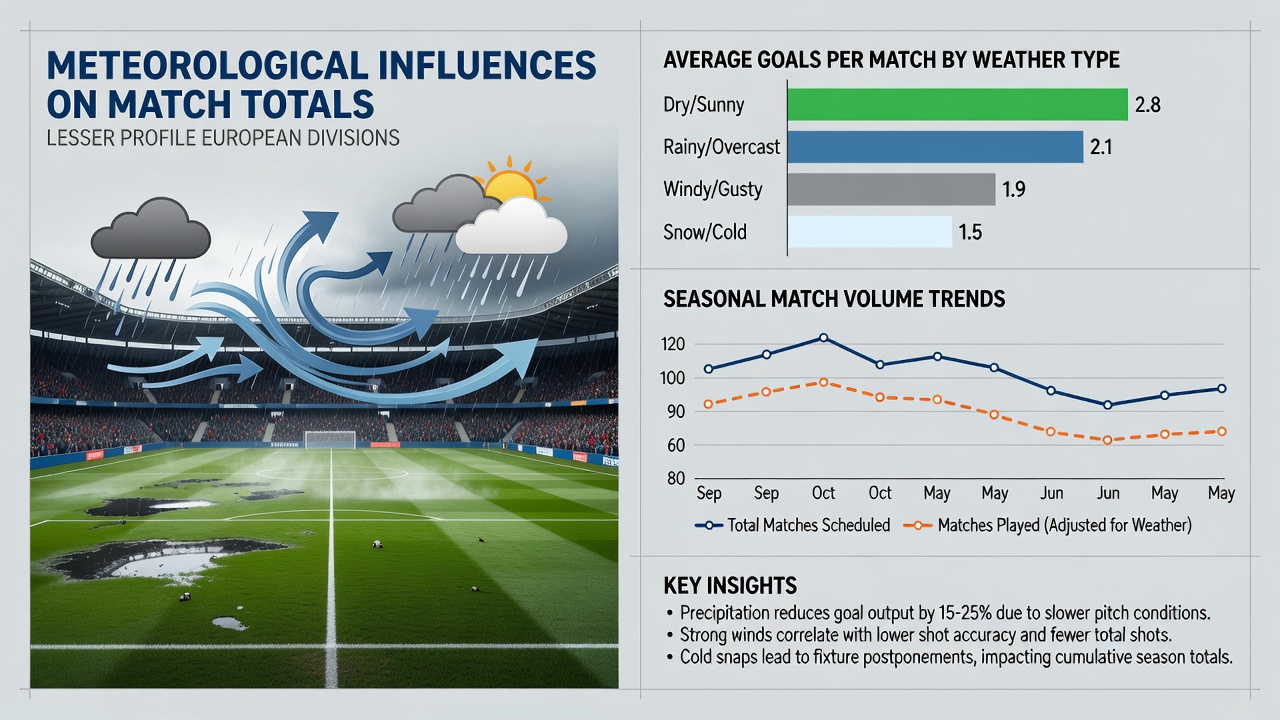
Heavy rainfall alters surface friction and ball behavior in ways that favor defensive setups, and data from the 2024-2025 campaigns across ten secondary leagues shows average goals per game dropping by 0.8 when matches occur during sustained showers. Teams adapt by shortening passing sequences, which limits high-percentage scoring opportunities near the penalty area, whereas drier conditions allow for quicker transitions that elevate totals. Observers note that goalkeepers face increased handling challenges on slick surfaces, leading to more errors that occasionally offset the overall decline in open-play goals.
Moderate rain between 2 and 4 millimeters per hour produces mixed results, with some fixtures recording elevated set-piece goals because defenders struggle to maintain positioning during dead-ball situations. Studies compiled by the European Centre for Medium-Range Weather Forecasts indicate that such patterns repeat across northern and central European venues where drainage systems vary in effectiveness.
Wind Influence on Aerial Play and Totals
Strong crosswinds disrupt flight paths of crosses and shots from distance, and records from the 2025 Superettan season reveal that matches with sustained winds above 25 kilometers per hour produced 12 percent fewer total goals than calm-weather equivalents. Midfielders adjust by favoring ground passes, which reduces the volume of speculative efforts that contribute to higher-scoring outcomes in these divisions. Forward runs into channels become less predictable when gusts push balls off intended trajectories, forcing coaches to modify attacking patterns mid-match.
Headwinds and tailwinds along the length of the pitch create asymmetric conditions that affect one team more than the other depending on the half, and analysts have documented shifts in expected goal values that align with wind direction changes recorded at nearby weather stations. These adjustments prove especially pronounced in stadiums without extensive roofing or windbreaks common in lower-tier facilities.
Temperature Variations and Player Output
Ambient temperatures below 8 degrees Celsius slow muscle response times and reduce sprint distances covered by players, according to physiological monitoring conducted in the Austrian 2. Liga during winter months. Matches played under these conditions show totals declining by an average of 0.6 goals compared with fixtures above 15 degrees Celsius, while extreme heat above 28 degrees Celsius leads to earlier fatigue that shortens effective playing time in attacking phases. Hydration protocols and substitution patterns shift accordingly, yet the net effect on goal frequency remains consistent across multiple datasets.
July 2026 pre-season schedules in southern divisions introduce additional variables when high humidity combines with elevated temperatures, producing conditions that limit high-intensity efforts and favor teams with deeper benches. Research from sports science departments at universities in Spain and Italy highlights how these environmental factors interact with fixture scheduling to shape early-season scoring trends.
Regional Patterns Across Secondary Leagues
Leagues situated in maritime climates experience more frequent precipitation events that compress match totals during autumn and spring windows, whereas continental venues encounter greater temperature swings that produce wider variance in goal outputs from week to week. Data aggregation across 1,200 fixtures in the 2025 calendar year demonstrates that wind-prone coastal grounds in the Irish First Division and Norwegian OBOS-ligaen register the strongest correlations between meteorological readings and final scores. Indoor or retractable-roof venues remain rare in these divisions, which amplifies the direct influence of open-air conditions on playing style.
Coaches and analysts incorporate localized forecasts into preparation routines, adjusting set-piece emphasis and pressing triggers when models predict sustained adverse weather. These adaptations appear in match reports where teams alter formation shapes within the first 15 minutes based on observed ball behavior under current atmospheric conditions.
Integration of Forecasts in Performance Analysis
Performance models now incorporate real-time meteorological inputs alongside traditional statistics such as expected goals and possession metrics, and organizations tracking secondary European competitions have reported improved accuracy in projecting totals when weather variables receive equal weighting. This approach reveals that certain venues exhibit amplified sensitivity, with goal suppression occurring at lower precipitation thresholds due to poor drainage or exposed topography. Teams that maintain detailed venue-specific weather logs gain measurable edges in predicting how conditions will shape the flow of play.
Conclusion
Meteorological factors continue to shape scoring patterns in Europe's lesser-profile divisions through documented effects on pitch conditions, player physiology, and tactical execution. Comprehensive datasets spanning multiple seasons confirm consistent directional impacts from precipitation, wind, and temperature across varied geographic settings. Analysts and clubs increasingly integrate atmospheric data into preparation and evaluation processes, reflecting the established role these variables play in determining match outcomes within these competitions.